ServicesSolar Panel Installation
Solar Panel Installation in Herriman
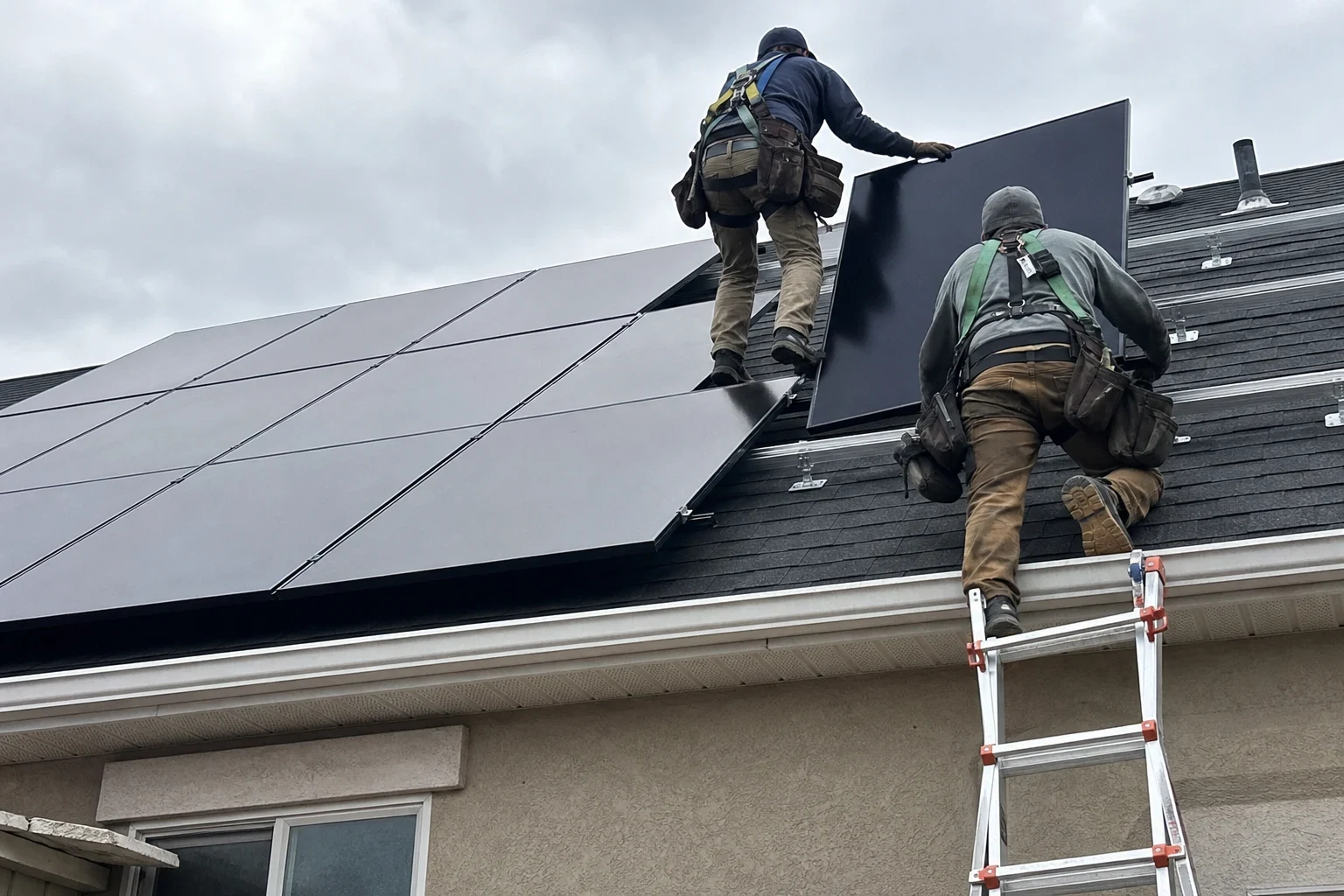
We design and install solar arrays on your roof, sized to your home's actual electric use, then handle the permit, the wiring to your panel and the utility paperwork. Each step is explained before it happens, the way you'd want a neighbor to treat your home.
What a roof installation involves
Solar panel installation is the right call when your power bills are steady or climbing and your roof has good sun exposure. We check the roof's condition first, then fasten attachments into the rafters with flashing that sheds water, set aluminum rails across shingle or metal roofs, and mount the panels a few inches above the surface. Wiring runs in conduit down to your main electrical panel. If your roof is shaded or not a good fit, a ground-mounted array in the yard is also an option.
We size every system from twelve months of your utility bills, not a rough guess. We are licensed in all states served, and the installation work we do carries a lifetime warranty. You can start with $0 up front.
What the installation includes
- 01
Usage and shade analysis
We read a full year of your usage, then check each roof plane for shade from trees, chimneys and nearby buildings. Low winter sun throws much longer shadows than summer sun, so we plan for both.
- 02
Roof check, attachments and flashing
We check the shingles or metal panels and the decking before anything goes up. Attachments are fastened into the rafters and flashed so water runs past them, and the racking is sized for local wind and snow loads.
- 03
Racking and conduit
We set aluminum rails in straight, evenly spaced rows and clip the wiring beneath the panels. Conduit runs neatly from the array down the wall to your main panel, fastened and sealed where it passes through.
- 04
Inverters and the panel tie-in
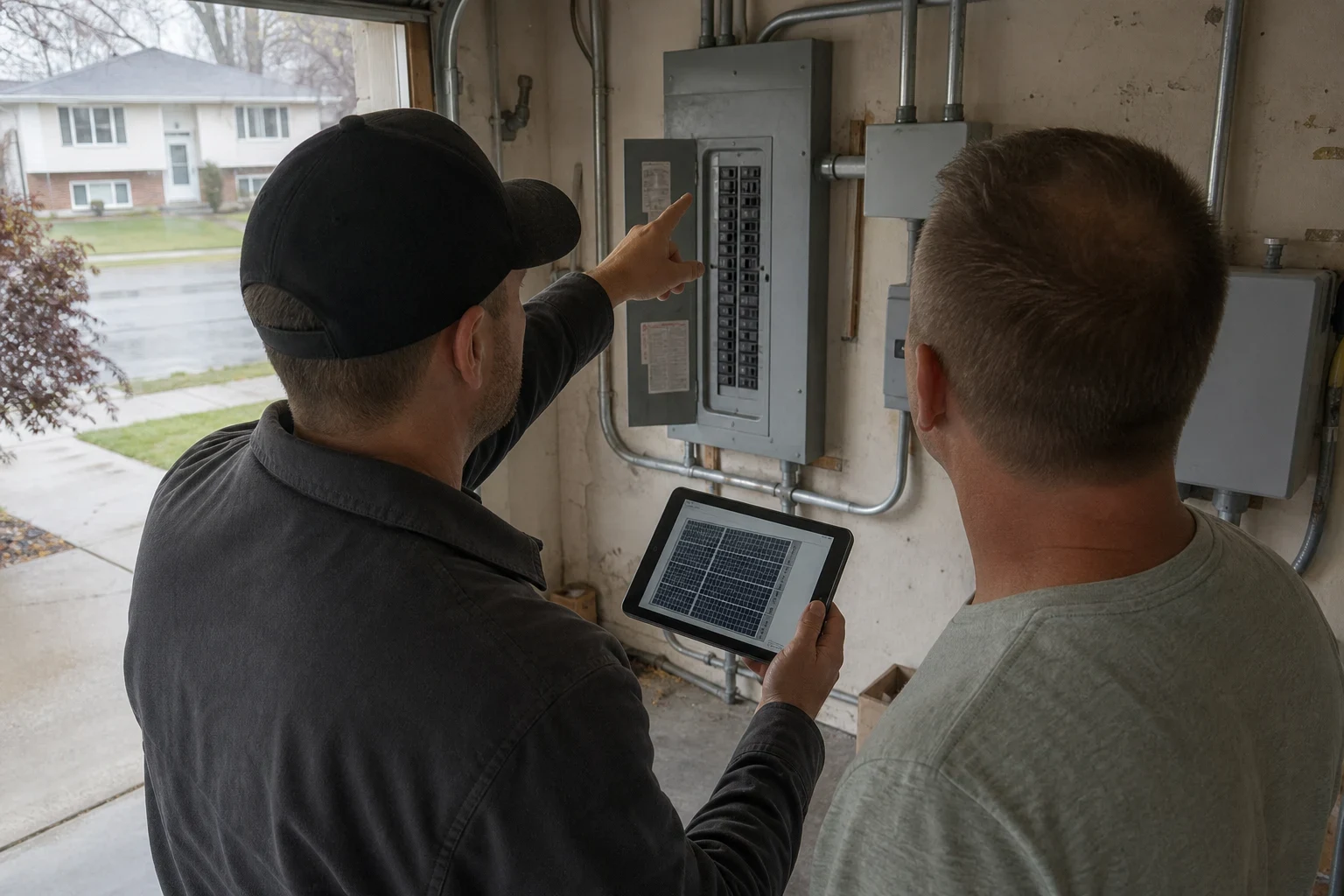
We choose a string inverter or microinverters based on your layout and any partial shading. We install the disconnects and code-required labeling, and if your main panel lacks capacity, you hear about it before any work starts.
- 05
Permit, inspection and interconnection
We pull the permit, meet the inspector and file the interconnection application with your utility. The system is not switched on until permission to operate arrives.
- 06
Production monitoring
We connect the monitoring before we leave, so you can see what the array produces each day and spot a drop early.
Questions about Solar Panel Installation?
Call(801) 528-3459Signs solar makes sense for your home
Summer bills spike
Air conditioning in July and August drives most homes' largest bills of the year. Those same months bring the strongest sun, so production lines up with your heaviest use.
You have a sunny roof
A south, east or west roof plane with few tall trees nearby is ideal. Even a garage roof can often hold a useful array.
Your roof is in good shape
Panels stay on the roof for decades, so a roof with plenty of life left is the best base. If yours is shaded, steep or near replacement, we tell you, and a ground mount is an option.
A new electric load is coming
An electric vehicle charger or a heat pump can add thousands of kilowatt-hours a year. Planning the array around that load now avoids an undersized system later.
You plan to stay
Panels produce for decades, so the savings build the longer you live in your home.
How the project runs, start to finish
- 1
Savings analysis
On the phone or in a free virtual appointment, we review your bills and your roof layout. You get a proposed system size and a clear picture of expected production.
- 2
Design and permit
We draw the panel layout on your roof, the conduit route and the electrical one-line diagram, then apply to the city for the building permit ourselves. You approve the final layout before anything is ordered.
- 3
Roof attachments and flashing
The crew, working in harnesses, locates the rafters, fastens the attachments and flashes each one. We protect gutters and landscaping below before work starts.
- 4
Racking, panels and wiring
Racking goes up, panels are mounted and wired, and the inverter and disconnects are tied into your main panel. Before the crew leaves each evening, the yard is picked up and loose materials are stowed.
- 5
City sign-off and switch-on
Once the inspector approves the work and your utility issues permission to operate, we turn the system on. Then we show you how to read the monitoring so you know what normal production looks like.
Where the cost of a roof array comes from
Your quote reflects two things: how much energy your home needs, and the work it takes to mount the array on your roof and get that power to your main panel safely. A matching electric bill next door can still lead to a different number at your house. Every estimate we give is written and broken out line by line, so you can see what each part of the job costs.
- Array size in kilowatts
- Each added kilowatt brings more panels, more racking and more roof attachments. Because we size the array from a year of your bills, you aren't paying for capacity your home won't use.
- Wire run to your panel
- The farther the array sits from your main panel, the more conduit and wire the job needs. Long runs also call for heavier-gauge wire so voltage drop stays low and production isn't lost on the way in.
- Roof type and condition
- Shingle and metal roofs use different attachments, and steep or multi-plane roofs take longer to work on. We check the roof before we quote, so it shows up in the estimate instead of on install day.
- Room in your main panel
- An older service panel, or one with no free breaker slots, may need replacing before it can take the solar breaker. We flag this during the savings analysis so the work and its cost are known up front.
Solar installation questions
Do you put panels on my roof?
Yes. Most of our installs go on shingle or metal roofs, with every attachment flashed to keep water out. If your roof is shaded or not a good fit, we can build a ground-mounted array in your yard instead.
How does snow affect production?
Snow slides off tilted panels fairly quickly, because the dark glass warms in sunlight. Winter output is lower mainly because days are shorter. Our production estimate accounts for that.
What does $0 up front mean?
You can have the system installed with $0 up front. We go over the terms on the phone so you know exactly what you are agreeing to before you sign anything.
What warranty comes with the installation?
The installation work we do carries a lifetime warranty. That covers our workmanship on the system we build at your home.
Can I add a battery later?
Yes. We plan the inverter and panel layout so battery storage can be added when you're ready. Our Battery Storage page explains how that works.
Find out what solar would do for your bills
Pull up a year of power bills and we'll walk you through what an array on your roof could produce. Our referral offer applies too: earn $1,000 for every referral that goes solar.