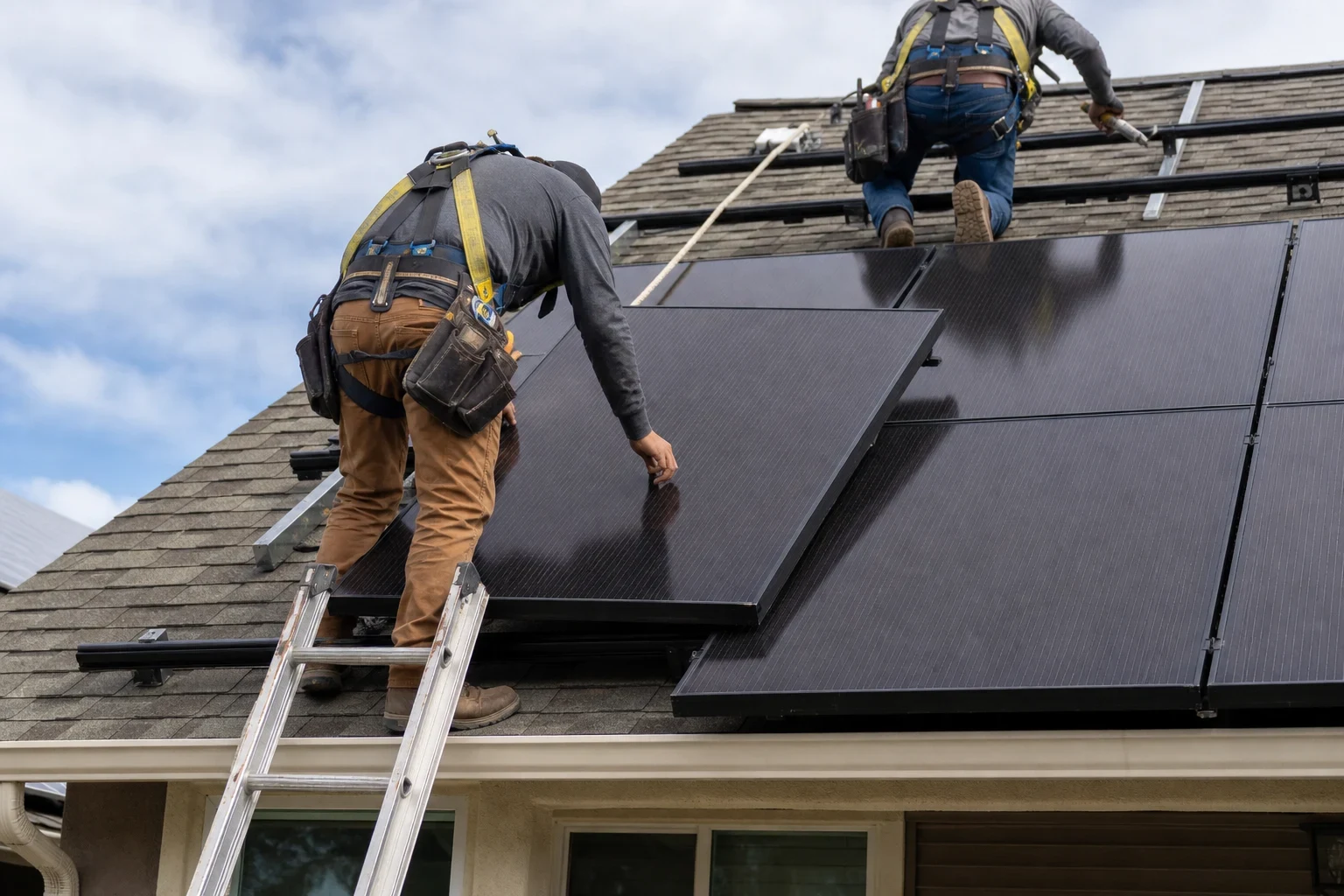
ServicesSolar Panel Repair
Solar Panel Repair in Herriman
When production drops or the inverter throws a fault code, we find the cause before we replace anything. We test strings, connectors, inverters and wiring at your home, show you what failed and why, and give you a written repair quote you can read line by line.
What solar panel repair covers and when it makes sense
Most systems that stop producing have not worn out. A single failed MC4 connector, a tripped breaker, a dead microinverter or a chewed wire can take a whole string offline while the panels themselves are fine. Solar panel repair means finding that one weak point and fixing it, so you get your production back without paying for equipment you don't need.
We handle each call the way we'd want a neighbor to handle our own system: test first, explain what the meter shows, and leave the decision with you. If a module is cracked or a string inverter is near the end of its life, we tell you plainly and price the repair and the replacement side by side.
We are licensed in all states served, and any work on DC wiring, disconnects or inverters is done to current electrical code.
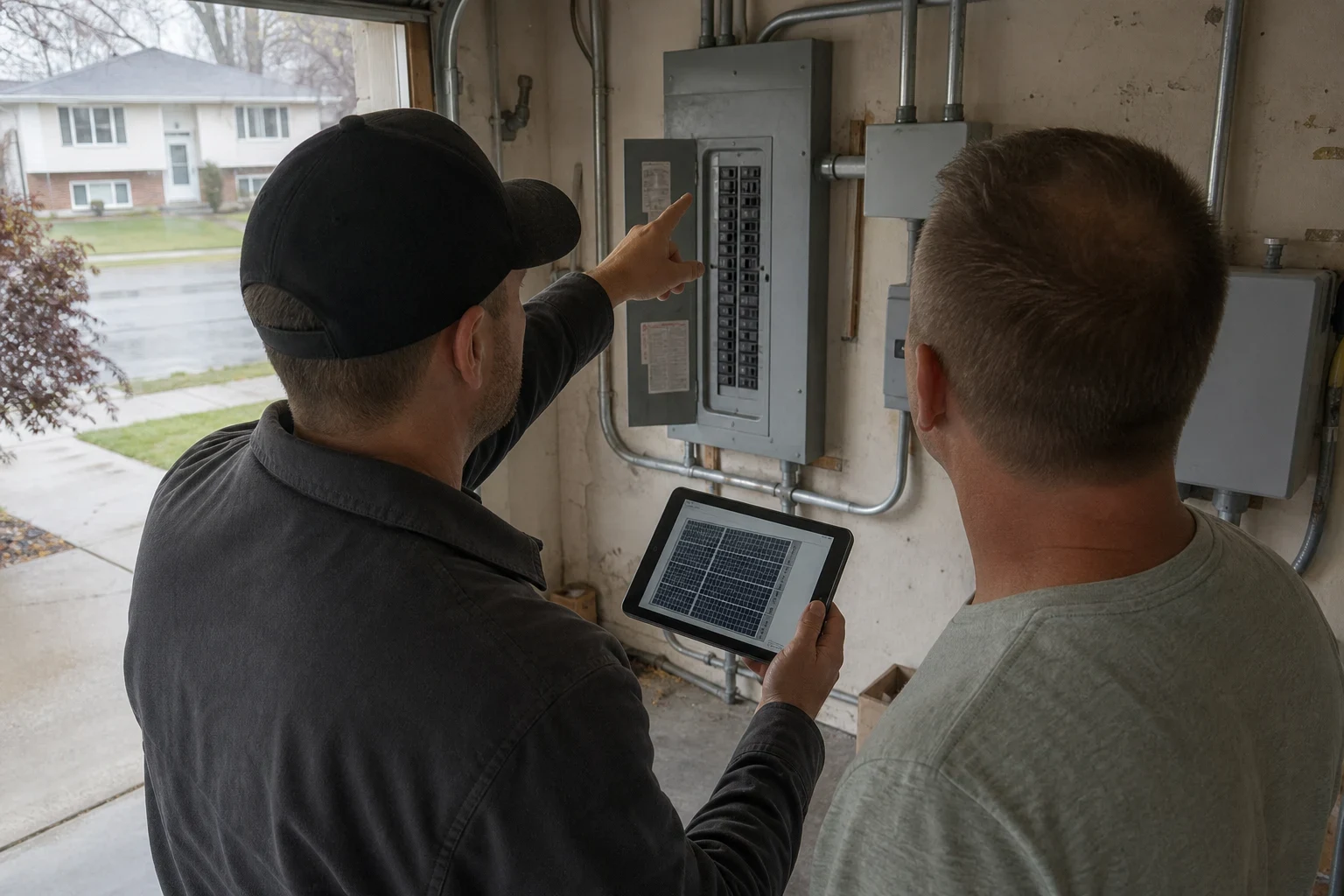
What our repair visit includes
- 01
Monitoring and production review
Before we arrive, we ask for your monitoring app data or inverter readout. A string that reads zero and production that falls off every afternoon point to different causes, so the visit starts with a plan.
- 02
String and insulation testing
We measure open-circuit voltage and current on each string and run insulation resistance tests to find ground faults. Those numbers tell us whether the problem is a module, a connection or a wire run.
- 03
Inverter and microinverter diagnosis
We read fault codes, check AC and DC input, and confirm whether a unit has failed or is shutting down for a protective reason, such as high grid voltage or an arc fault. Failed units are swapped and recommissioned.
- 04
Connector and wiring repair
We cut back corroded or mismatched MC4 connectors, cracked conduit, loose lugs and wiring damaged by rodents or UV, then replace them with matched parts. Every repaired run is retested.
- 05
Module inspection
We look for cracked glass, hot spots, browned or delaminating backsheets and scorched junction boxes. When a module is damaged, we replace it with a compatible one.
- 06
Written findings with photos
You get photos of what we found and a line-item list of what we fixed. That record also helps if you file a manufacturer warranty or insurance claim.
Questions about Solar Panel Repair?
Call(801) 528-3459Signs your system needs a repair visit
Production dropped and stayed low
A dip during a cloudy week is normal. A drop of a quarter or more on clear days, compared with the same month last year, usually means a string or inverter is offline.
Fault light or error code
A red or amber light on a string inverter, or a ground fault or isolation error, means the inverter detected a problem. It may have stopped exporting power to protect itself.
Panels reading zero in the app
On microinverter systems, one or two panels showing zero usually point to a failed microinverter or a loose connector at that module.
Damage after a storm
Spring hail and winter freeze-thaw cycles around Herriman can crack glass or loosen wire clips. Cracked glass lets moisture reach the cells, so have it checked before the damage spreads.
Chewed wires or nesting
Squirrels and birds chew wire insulation and pack debris around connectors. Exposed conductors can cause ground faults and create a fire risk, so stay clear until the system is inspected.
A solar breaker that keeps tripping
Repeated trips can come from an inverter fault, an undersized breaker or a loose connection heating up at the panel.
How a repair job runs
- 1
Free quote by phone
Tell us what you're seeing, who installed the system and what the monitoring shows. We can often narrow down the cause on the call or during a free virtual appointment before anyone drives out.
- 2
On-site testing
We shut the system down safely using rapid shutdown and the AC disconnect, then test each string, connector and inverter. You see the readings and photos as we go.
- 3
Written repair quote
We explain what failed and why, then give you a line-item price for the fix. If a replacement part would cost close to the repair, we say so.
- 4
Repair and recommission
We replace the failed parts, retest insulation and voltage, restart the system and confirm production in your monitoring app before we leave. Old parts and packaging leave with us.
What moves the cost of a repair
Repair pricing depends on what failed and how hard it is to reach. A loose connector and a failed string inverter are very different jobs, which is why we test before we quote. You get the price in writing before any work starts.
- The failed part
- Connectors and fuses are inexpensive. Inverters, microinverters, optimizers and modules cost more, and discontinued models may need a compatible substitute.
- Access to the fault
- A fault at the inverter or an easy-to-reach module is quick. A fault buried mid-array may mean lifting neighboring modules to reach the wiring, which takes longer.
- Manufacturer warranty coverage
- Many inverters and modules carry manufacturer warranties on the part itself. We help you gather serial numbers and photos for the claim, but the manufacturer decides what it covers, and labor may not be included.
- Number of faults
- Storm or rodent damage often affects several wire runs at once. We test and list each one separately so you can see exactly what you're paying for.
Solar panel repair questions
Do I need to know who installed my system?
It helps. The installer, inverter brand and warranty paperwork tell us which parts are compatible and which manufacturer warranties may apply. If you don't have that information, we can read model and serial numbers on site. We back our own installation work with a lifetime warranty, so if we installed your system, mention that when you call.
Is it safe to keep running my system with a fault?
It depends on the fault. A single offline microinverter mostly costs you production. A ground fault, burned connector or exposed wire is a safety issue, so turn the system off at the AC disconnect and stay clear of the array until it's checked.
Should I repair or replace an old inverter?
String inverters often reach the end of their service life well before the panels do. If yours is out of warranty and has failed more than once, a replacement is often the better value. We price both options and explain the differences in efficiency and monitoring so you can decide.
Will insurance cover storm damage to my panels?
Many homeowner's policies cover solar equipment as part of the property, but coverage varies. We document the damage with photos and a written list of failed parts that you can give your insurer. The adjuster makes the coverage decision, and we don't act on their behalf.
How long does a repair take?
Most connector, fuse and single-inverter repairs are finished in one visit once the parts are on hand. Some modules and inverter models have to be ordered, which adds time. We include the expected timeline in your written quote.
Find out what's holding your system back
Tell us what your inverter or app is showing, and we'll walk you through the likely causes. Then we'll test your system at your home and give you a written quote before any repair starts.